There are places in the world where the past doesn’t feel like a distant memory, but rather a living, breathing thing. Hyde County, North Carolina, is one of those places. When you step out of the truck in the pre-dawn darkness, you aren’t just stepping onto dirt; you are stepping into a legacy that spans generations.
At the Mattamuskeet Goose Club, we often tell our guests that waterfowl hunting here is different. It isn’t just about the bag limit or the brand of shotgun you carry. It is about tapping into a history that runs as deep as the canals crisscrossing the marsh. To help you understand the soul of this region, we’ve answered the most common questions about the unique heritage of Hyde County waterfowling.
What makes the history of Lake Mattamuskeet so unique?
To understand the hunting, you must understand the geography. Lake Mattamuskeet is not just a body of water; it is a geological phenomenon. As the largest natural lake in North Carolina, it has served as the wintering dining room for the Atlantic Flyway for centuries.
In the mid-20th century, this area was known globally as the “Goose Capital of the World.” The skies were so thick with Canada Geese that they reportedly blocked out the sun. While migration patterns have shifted and the species mix has changed—now favoring Tundra Swans, Snow Geese, and a variety of ducks—the culture remains. The historic Mattamuskeet Lodge, with its iconic pumping station chimney, stands as a silent sentinel reminding us of the days when governors and celebrities flocked here to experience the “Grand Passage.”
What do you mean by a tradition you can “feel”?
Hunting is often described as an action—something you do. But in Eastern North Carolina, it is something you feel.
It’s the specific suction of the mud on your waders, a feeling known by every hunter who has walked these impoundments for the last hundred years. It is the smell of the black water, tainted with peat and salt air from the Pamlico Sound. It is the camaraderie found in the blind. When you hunt with the Mattamuskeet Goose Club, you are participating in a ritual. The silence before shooting time, the specific way the decoys bob in the wind, and the shared coffee poured from a battered thermos—these are sensory details that connect you to the hunters of the 1930s just as much as the birds do.
Is the “Golden Age” of waterfowl hunting over?
Many old-timers will tell you that the days of the 1950s are gone, and in some ways, they are right. However, we are currently living in a new Golden Age of conservation and variety.
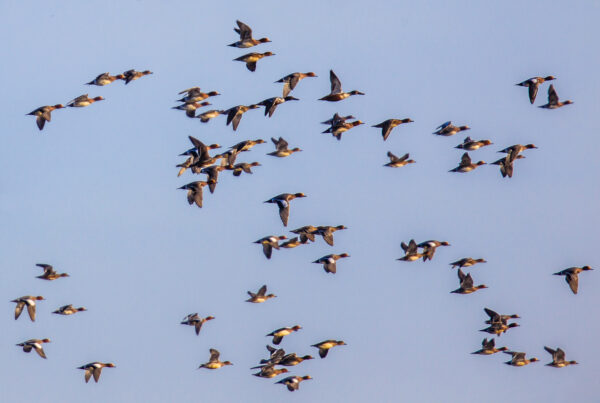
While the Canada Goose population has shifted, the sheer biomass of waterfowl in Hyde County remains staggering. We are seeing incredible numbers of Northern Pintails, Green-winged Teal, and Wigeon. Organizations like Delta Waterfowlhave done immense work to secure the Atlantic Flyway, ensuring that while the targets may change, the abundance remains. The tradition hasn’t died; it has evolved. The sky still comes alive, just with a different chorus of calls.
How does the Club preserve this heritage?
Preservation requires active management. You cannot simply buy land and hope the birds appear; you must cultivate the environment.
We view ourselves as stewards of the land first and hunters second. By meticulously managing our impoundments—controlling water levels and growing high-quality food sources—we ensure the habitat thrives. This creates a sustainable cycle where birds return year after year. When you book one of our semi-guided hunts, you are directly supporting land management practices that keep the Hyde County tradition alive for the next generation.
Why is hunting here considered a “gentleman’s sport”?
The term “gentleman’s sport” isn’t about exclusion; it’s about respect. In the early days of the Mattamuskeet clubs, hunting was a social affair conducted with dignity. It was about respect for the game, respect for the land, and respect for your fellow hunters.
We maintain that atmosphere today. We believe in ethical shots, respecting your neighbors in the blind, and savoring the experience rather than rushing to fill a limit. It is about slowing down. In a modern world that moves at breakneck speed, sitting in a blind watching a Hyde County sunrise allows you to pause time, even if just for a morning.
The birds are coming. The history is waiting. Will you be part of the tradition this season?